
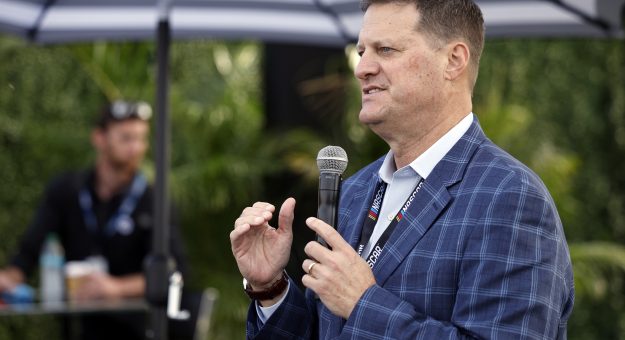
Steve O’Donnell said he’s spent much of his first few months as CEO getting out into the industry and hearing from stakeholders about what’s important to them. He’s attended most of the races this season. He said the NASCAR industry needs to work more cohesively than ever to set up the sport for favorable media rights negotiations around 2029.
…
While the NASCAR Team Owner Council has existed for years, O’Donnell created seven committees to give teams a new level of power in helping define the future of professional stock car racing.
Brad Keselowski, co-owner and driver of RFK Racing, said the committees are “signaling a level of collaboration that probably didn’t exist before.”
The committees are focused on: the future of NASCAR’s car, engine and OEMs; schedule and race weekend formats; at-track experience for fans, sponsors and teams; revenue and commercial growth; international; on-track competition and product development; and media, content and fan base growth efforts.
…
Additionally, NASCAR is developing places where it could race internationally — Canada, England, the Middle East and Asia — and what sort of technologies it will use to power its race cars. It’s also researching what it wants its domestic schedule to look like in the next media cycle.
…
With fans complaining that the racing at Daytona and Talladega lacked entertainment value, NASCAR made a midseason change to its superspeedway rules package this month, adjusting certain parts of the car to make the racing more enthralling for fans.
…
“We want to react quickly — Steve O’Donnell, our new CEO, is on us all the time to get the feedback and react on the feedback as quick as we can,” Probst said. “We made changes that we felt had the highest potential to make a big change but with the lowest risk as well. We didn’t pull every lever that we could, because some of those would frankly require us to get 15 cars down to Daytona [for testing].”