
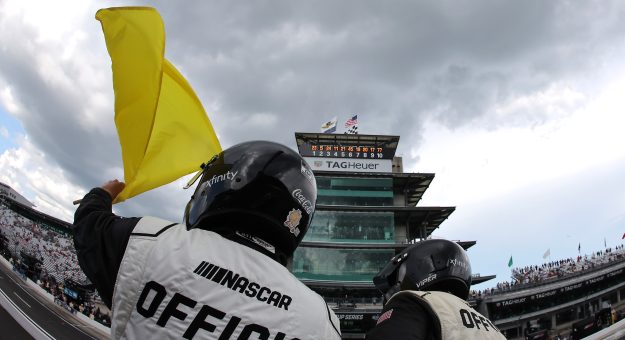
NASCAR is weighing solutions to reduce the number of laps run under caution, particularly for yellows that occur near the end of stages.
During the latest episode of the “Hauler Talk” podcast, vice president of racing communications Mike Forde said NASCAR officials started discussions during the Brickyard 400 about tightening yellows in the future. The caution flag flew near the end of the first two stages at Indianapolis Motor Speedway – among five cautions that lasted for 27 of the race’s 160 laps.
…
“If NASCAR fans are angry at the length of caution periods, I can promise you that NASCAR matches that displeasure,” Forde said. “We want green-flag racing, and we want to get it as fast as possible.”
…
Forde noted that cautions generally consume a minimum of four laps around the 2.5-mile track because of the time needed to open the pits and choose positions for the double-file restart. NASCAR could potentially move the location of the Choose V to help eliminate a lap under caution.
“Maybe there’s something there that we can look at where we can choose and then go immediately back to green, but it won’t work at every single track,” Forde said. “So there are several things in the hopper. It’s something that’s on our radar. It’s important to us to get back green. We keep stats religiously on the blocks of time between red-, yellow- and green-flag racing. We’re always working to get that green number higher and higher and higher.
“Stage breaks are a big topic of conversation. We hear it, and we see it.”
— NASCAR.com —