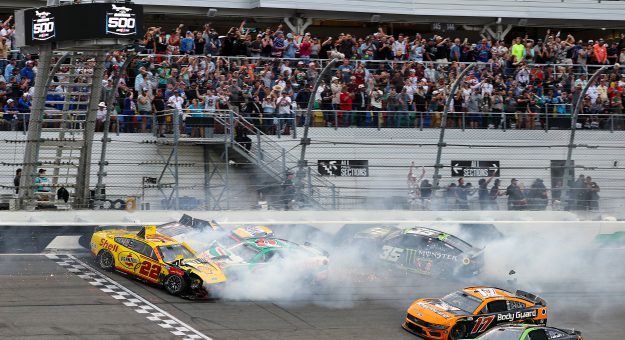
DAYTONA BEACH, FLORIDA - FEBRUARY 15: Joey Logano, driver of the #22 Shell Pennzoil Ford, Brad Keselowski, driver of the #6 Castrol Ford, Chase Elliott, driver of the #9 NAPA Auto Parts Chevrolet, and Riley Herbst, driver of the #35 Monster Energy Zero Sugar Toyota, spin after an on-track incident to end the NASCAR Cup Series Daytona 500 at Daytona International Speedway on February 15, 2026 in Daytona Beach, Florida. (Photo by Chris Graythen/Getty Images) | Getty Images

Has the Chase changed how drivers race?

After seven races in the 2026 NASCAR Cup Series season, consider us in agreement with this longtime axiom:

It’s too early to talk about the points.

But it’s not too early to talk about the impact the points could have on driver behavior.

There have been 42 cautions so far in 2026 – the fewest through seven Cup races since 2018 (when there were 40) and the second-lowest total of the stage racing era that began in 2017 (and guaranteed two cautions per race).

The statistics would indicate Cup drivers are being more prudent with their moves, particularly earlier in races.

Simply translated, it means being more mindful – from start to finish – of the risks vs. rewards of racing in the Cup Series under a new paradigm with old mantras.

NASCAR Substack