
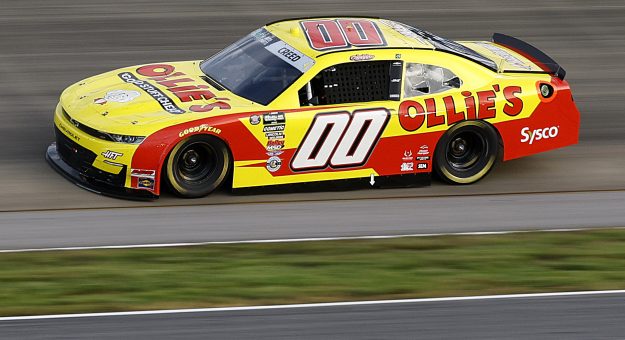
Haas Factory Team (HFT) announced today a new partnership with Vielight, a neurotechnology company focused on photobiomodulation, a non-invasive, non-thermal red-light therapy. Vielight will serve as the primary sponsor of Sheldon Creed’s No. 00 Chevrolet for the NASCAR O’Reilly Auto Parts Series race at Pocono Raceway and continue as an associate partner for the remainder of the 2026 season.
“NASCAR drivers face extreme physical demands, sustained high G-forces, and rapid-fire decision-making environments where cognitive sharpness is everything,” said Joe Custer, President of Haas Factory Team. “Vielight represents the absolute cutting edge of neurotechnology. By focusing on brain health and recovery at a cellular level, this partnership gives me a powerful tool to maintain peak performance, accelerate recovery, and build long-term neurological resilience.”
“Vielight is working to bring more attention to brain health, which is so important to us drivers. I’m really excited to have them come on board with us this season,” said Creed. “It’s a great partnership for Haas Factory Team and the No. 00 team, and we’re proud to represent Vielight. Hopefully we can put together a strong run at Pocono and get them to Victory Lane next month.”
The partnership will debut with Vielight as the primary partner of Creed’s No. 00 Chevrolet at Pocono Raceway, where Creed owns two top-five finishes and a pole in four career starts. The Vielight branding will remain on the No. 00 Chevrolet as an associate sponsor for the balance of the 2026 campaign.
“Racing places real neurological demands on drivers, and brain health deserves a larger role in that conversation,” said Dr. Lew Lim, founder and CEO of Vielight. “Our partnership with Haas Factory Team helps bring greater visibility to non-invasive technologies designed to support performance, cognitive function and recovery both on and off the track.”
Since 2010, Vielight has advanced research and development in photobiomodulation technology, with more than 30 published studies and clinical research initiatives focused on brain health, cognitive function, and recovery. The company’s intranasal and transcranial photobiomodulation devices are designed for home use and have been studied in areas including attention, cognitive control, and neurological performance.
— Haas Factory Team —